Collaborative Post | When a home is set up like a showroom, nothing about it makes you want to settle in, put your feet up, and relax. It might look nice to outsiders, and even to you as you stand in it, but it does not feel that way when you seek comfort. You cannot truly feel comfortable in a home that looks like a staged open house – at least not for long, without beginning to feel that something is missing from the space.
The Psychology of “Place Attachment”
There is actual science behind place attachment. A study that was published in the Journal of Environmental Psychology found that place attachment – the emotional connection between a person and their living environment – correlates directly with residential satisfaction and psychological well-being. The size and opulence of your things do not drive that attachment: what matters is personal resonance. Objects imbued with memory, history, or meaning create a feedback loop that lowers your stress and increases your sense of safety in a space.
That is the line between curation and decoration. You saw an ad for cute wine glasses and clicked on the link and bought them: decoration. Your grandmother gives you her old wine glasses, and you use them every night when the kids are asleep: curation. Decoration is adding stuff to a room, while curation is composing a part of the narrative of who you are. The Pinterest-worthy bedroom has a lot of decoration, and none of the curation; a personal space can have both.
Start at the Front Door
Most houses overlook the potential of the entryway. The focus is often just on storage or practicalities. Yes, you will need some hooks for coats and keys, and a place to store mail. However, there is always a way to get creative about how you keep things.
The entryway is the first thing you see when you come home and the first thing guests encounter when they walk in. That first impression sets the tone for what follows. Therefore, even small, considered choices here — a well-chosen mirror, a thoughtful light fitting, a console table that earns its place — carry more weight than the choices made anywhere else in the house.
The Bones Matter More Than the Accessories
Before you start layering in personal artifacts, the structural pieces in a room need to earn their place. Meaningful decor does not work well when it is sitting on furniture that was chosen for convenience rather than intention.
The cabinetry and internal doors you choose carry more visual weight than most people account for. If you are looking for MDF door and cabinet specialists who bring genuine craft to their work, you could consider professionals such as Lovech or others operating at a similar level — the kind of maker where the finish and detailing give the personal items around them something to respond to. The whole room starts to hold together. A meaningful piece of pottery on a flat-pack shelf says something different than the same piece alongside cabinetry that was made with care.
Think of the structural pieces as the grammar of the room. The personal artifacts are the vocabulary. Both should support each other.
Three Elements, One Shelf
When in doubt, continue adding elements together rather than placing them separately around the room. A series of small pictures or signs that individually are just fine can look great together. For example, your old set of coasters, your favorite black-and-white vacation snaps, and the souvenir bottle opener the former owners left behind are enough to fill your walls.
Windows are to let in light. If yours looks directly into a neighbor’s studio or onto garbage cans, do not surrender privacy for the sake of having curtains. There is no design rule that says every window has to be flanked by yards of fabric. Most prefabricated shades or blinds will do the trick just fine.
Living Decor and Sensory Anchors
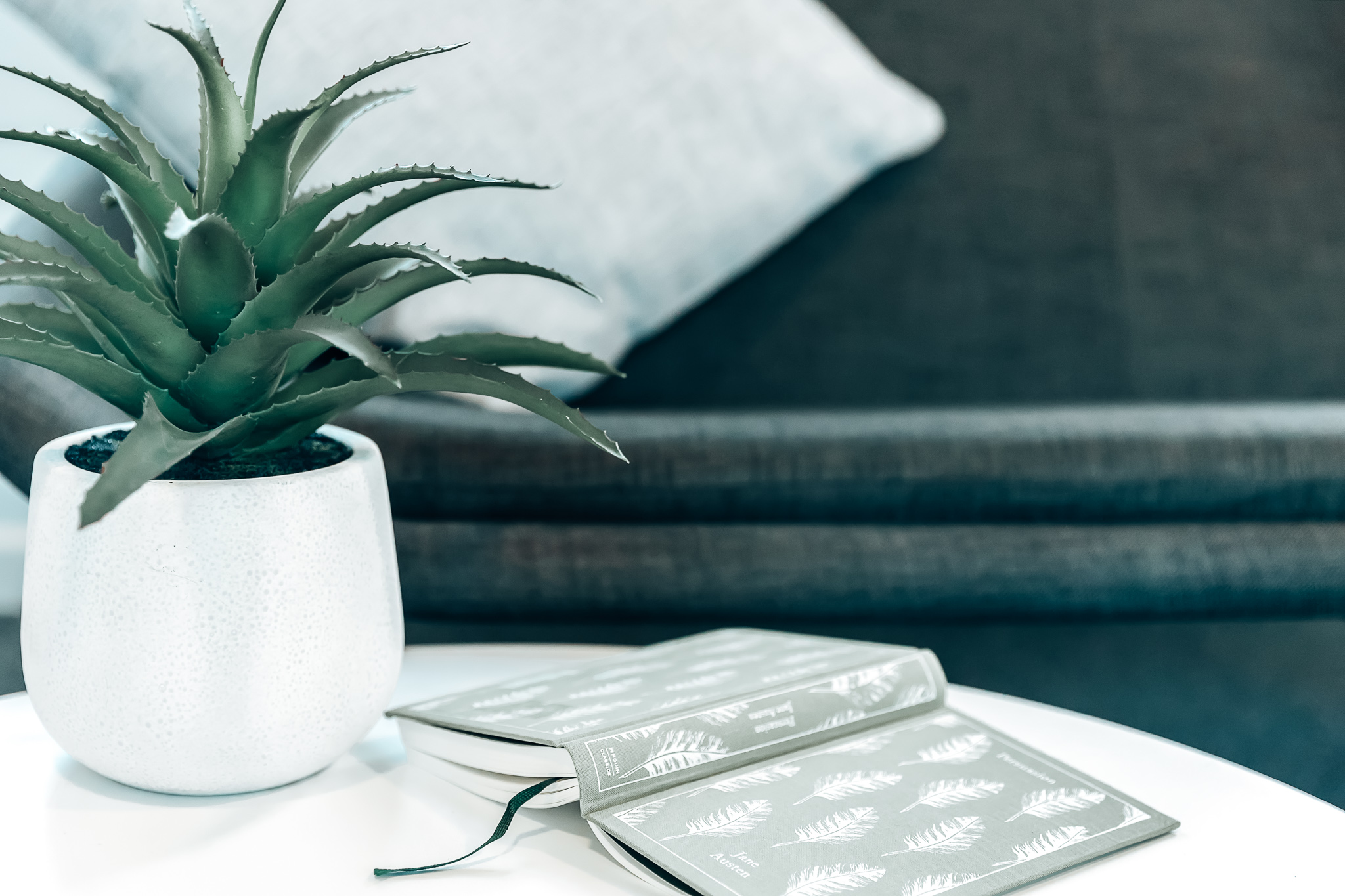
Plants hold a different presence in a room when they are there because of some meaning you have to them, rather than just their appearance. A plant you have grown from a cutting, or a type that grows locally to somewhere you have lived, gives you a sense of responsibility. You are not caring for a room – you are caring for something that has lived.
Smell functions in a similar way – a smell that is always associated with your home serves as a kind of sensory bookmark that is difficult to reproduce with any visual element. It is one of the quickest ways to make a place feel familiar, and one of the most underrated.
What You’re Actually Building
The aim of making your space your own is not just to have a well-decorated house in the magazine sense. It is to have a house that reflects who you are, where you have been, and what you have decided to keep. Such space does not merely function well. It works for you in ways you appreciate without even thinking about it
Leave a Reply