Updated on September 25th, 2026
Ghostwriters have been around for many years. Typically, ghostwriters have been used to write nonfiction memoirs of celebrities, with an example being Spare by Prince Harry. Everyone knew it was unlikely Prince Harry would write his own memoir. Therefore, it made sense that the ghostwriter J. R. Moehringer was hired to share his side of the story on what it was like growing up as the spare second son, his relationship with Meghan Markle, and stepping back from his royal role. However, it has not been uncommon for celebrities to use ghostwriters to write fiction novels, which seems to be a gray area and will be the subject of this post.
What is a Ghostwriter?
A ghostwriter is a person who is hired to write a piece of work that can include memoirs, novels, speeches, blog posts, songs, and more. However, another person, typically the person who hired the ghostwriter, will be credited as the author. There are various reasons a person may hire a ghostwriter, and according to a blog post about ghostwriters on Grammarly, the two most common reasons are that the person feels they do not have the writing skill or they do not have the time.
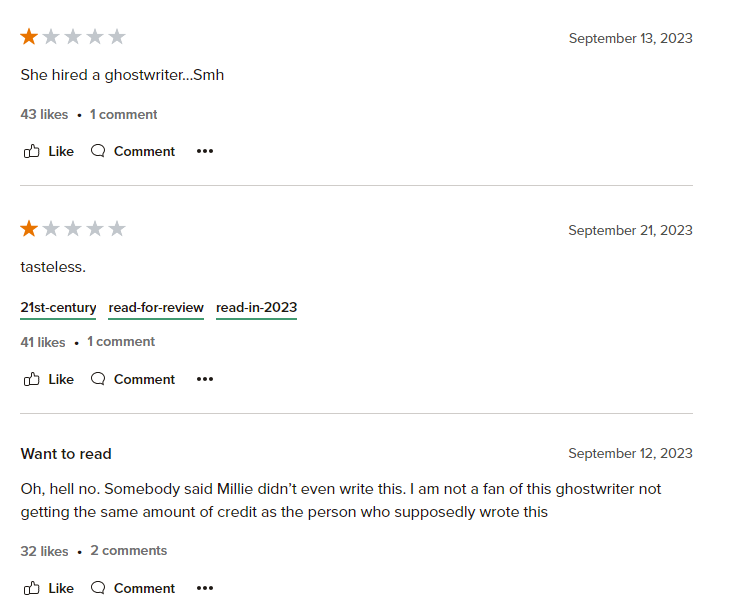
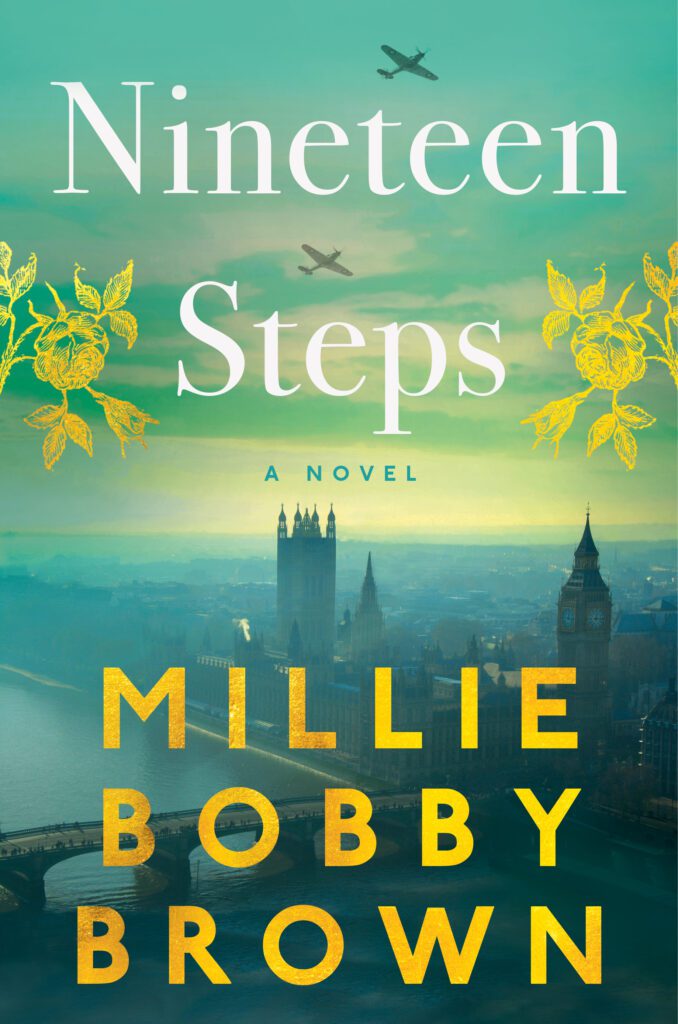
An example of a celebrity hiring a ghostwriter to write a fiction novel is Millie Bobby Brown. Millie is an actress, and she is best known for her roles as Eleven in Stranger Things and as Enola in the Enola Holmes movies on Netflix. On September 12th, 2023, Millie Bobby Brown published her first novel, Nineteen Steps, which is a fictionalized story based on the Bethnal Green tube station disaster and her grandmother’s experiences of living through the war. Despite Millie being open about using a ghostwriter, she is facing backlash, and people are rating the book 1 star simply because she used a ghostwriter. In this post, I want to address some concerns about celebrities using ghostwriters for fictional stories, and I would love to hear your thoughts as well.
Ghostwriters Are Not Credited
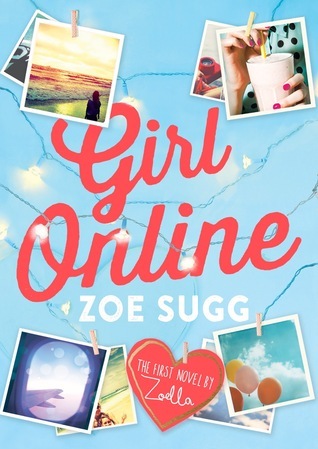
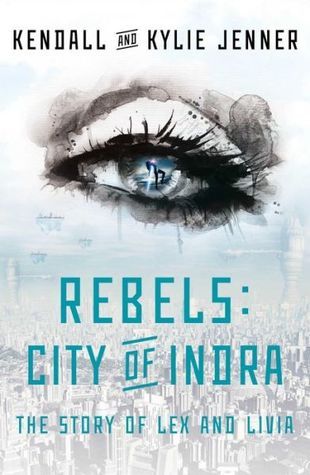
On the covers of ghostwritten novels, including Nineteen Steps by Millie Bobby Brown, Girl Online by Zoe Sugg, Rebels: City of Indra by Kendall and Kylie Jenner, and Life Uploaded by Sierra Furtado, there is no indication that a ghostwriter was used, as only the celebrity’s name is visible. In the book itself, the celebrity may thank the ghostwriter by name in the acknowledgments, but readers may be unaware that the person named is actually the ghostwriter.
Furthermore, if a reader purchases the book in-store or online, there is again no indication that a ghostwriter was used. When a ghostwriter is hired by a celebrity, the ghostwriter agrees to write the story for no credit, and sometimes, the ghostwriter has to sign a Nondisclosure Agreement that states the ghostwriter cannot legally share that they wrote the book. However, this can leave the reader feeling blindsided when they do find out the book is written by a ghostwriter instead of the celebrity, which will be another one of my points later on.
Despite there being no indication on the books that the book is ghostwritten, on Goodreads, Maya Sloan is credited as the co-author of Rebels: City of Indra, while Zara Lisbon is credited as a co-writer of Life Uploaded. Kathleen McGurl’s name appears after Millie Bobby Brown’s without any specification for Nineteen Steps, and the only book that credits the ghostwriter as the ghostwriter is Siobhan Curham for Girl Online.
Should the ghostwriter’s name appear on the cover of the book? Should there be a page at the beginning of the novel that credits the ghostwriter instead of simply listing their name in the acknowledgments? Also, should all ghostwriters be credited as ghostwriters on Goodreads and online marketplaces?

Potential Cash Grab + Readers Duped
When celebrities use a ghostwriter to publish their fictional novel, it can be viewed as a potential cash grab. Celebrities, including actresses and popular YouTubers, are bound to have a following, and the book will be marketed as the celebrity having written it, given that only their name appears on the cover. Their audience will then purchase the novel to further support them. However, when their audience discovers the book was actually written by a ghostwriter, they can feel duped that they supported the celebrity and view the book as just a way to make money off of them.
When it was discovered that the YouTuber Zoe Sugg used a ghostwriter for Girl Online, many readers felt duped because they purchased the book to support Zoe. When they found out Zoe did not write the book, they became upset and criticized Zoe, which led to Zoe taking a brief break from the internet due to the backlash. Are ghostwritten celebrity fiction novels a cash grab, or is publishing a book a way for celebrities to share a story and explore a different avenue of creativity? Are readers justified in criticizing a celebrity who used a ghostwriter for a fiction novel?
Diminishes the Work of Authors
Authors can spend years pouring their heart and soul into writing their first novel, and once they have published it, they may get very few sales, if any sales at all. On the other hand, celebrities can receive a book deal, hire a ghostwriter, and in 6 weeks, have a fully written book that sells thousands of copies because it is associated with the celebrity. Celebrity novels, in general, are bound to sell more copies than a novel by a newly published author. However, when a ghostwritten fiction novel is marketed as the celebrity having written it, it does diminish the time and work of actual authors.
When it comes to ghostwritten fiction novels, celebrities do play a role in the collaboration process. Katherine McGurl shared in her blog post, A new departure, that Millie Bobby Brown sent her research that was gathered by Millie and her family, and they had a couple of Zoom calls before she wrote the first draft, and Millie continued to send more ideas. Katherine further states, “The book went through several drafts since then, as we refined the story,” which implies that Millie did play a role in shaping the story despite not having a role in writing it. Even Kendall and Kylie Jenner had numerous FaceTime and Skype sessions with Maya Sloan and gave extensive notes on the drafts for their book. Should ghostwritten fiction novels be marketed as the celebrity writing them, or should it be clear to readers that the celebrity used a ghostwriter?
Final Thoughts
Ghostwriting is a career path some writers choose to follow, and ghostwriting a fiction novel for a celebrity can simply be a part of their job. However, when it comes to the readers, there is a gray area because they may be unaware that the novel is ghostwritten and feel upset when they find out the celebrity they supported did not actually write the book. Furthermore, ghostwritten fiction novels by celebrities can be seen as a potential cash grab by their followers because even though the celebrity does collaborate with the ghostwriter, they do not have a role in actually writing the book, which can diminish the time and work of actual authors.
I actually wrote about this too, and interviewed a bunch of ghostwriters who felt it wasn’t an issue, as it is a transactional agreement. Where they felt it was an issue was if the celebrity claimed sole authorship.
I’ll definitely have to check out the post! There doesn’t seem to be an issue between ghostwriters and celebrities because it is just their job to write the book. However, there is an issue when it comes to readers especially when the celebrity is not transparent about using a ghostwriter!
I am not surprised this is happening, but I didn’t have any idea of the details of celebrities using ghost writers to write fiction novels. It really just feels like a cash grab to me. Personally, I always feel let down when I find out an author isn’t actually the author of a book I read. I understand something will sell better with a famous name attached to it, but think the ghostwriter should get credited somewhere that people will for sure see it. This was a really interesting read!
I agree! It does feel like a cash grab because the celebrity is essentially using their name to sell a book they didn’t write. The ghostwriter should definitely receive credit and ideally, their name should be on the cover alongside the celeb’s.
Ghostwriting is such an interesting topic to learn about, and it’s quite unfair when the celebrity does not even acknowledge them in the book itself. I believe that having a ghostwriter for fiction is not great, but having one for nonfiction such as a biography, autobiography, or memoir is fine. I personally would really rather read a book if I knew it was written by the actual author and not a ghostwriter. If a ghostwriter is used, their name should also be on the cover or on the very first page of a book where the author thanks people.
I completely agree! It’s fine if a celebrity uses a ghostwriter for a memoir because they are sharing about their own life. However, when a celebrity uses a ghostwriter for a fiction novel, the ghostwriter should definitely receive credit and ideally have their name on their cover.
This is such an interesting and thought-provoking post! The use of ghostwriters in the world of celebrity fiction novels has always been a bit of a gray area, and you’ve articulated the various perspectives on this issue really well. It’s understandable that readers might feel a sense of betrayal when they discover that a book they bought to support a beloved celebrity was actually ghostwritten. On the other hand, it’s important to acknowledge that collaboration between celebrities and ghostwriters can still involve a significant creative input from the celebrity.
I think there’s a valid argument for more transparency in the publishing of such novels, like crediting the ghostwriter on the cover or in a more prominent way within the book itself. It could help set clear expectations for readers.
Overall, this post raises essential questions about the ethics and transparency of ghostwriting in celebrity fiction, and I appreciate your effort to bring this topic into the spotlight. It would be great to see more discussions and debates about this in the literary world.
Thank you! I completely agree with everything you said. It is often not transparent to readers that a ghostwriter was used, and even when a celebrity is open about using a ghostwriter, the ghostwriter does not receive the same credit as the celeb. I believe the best solution would be to simply include the ghostwriter’s name on the cover that way it is clear to the reader that the celeb had help writing the book.
Ghostwriter jobs are quite famous in Malaysia as well. Most celebrities and famous personalities are hiring them for their book. It’s an interesting job as well.
That’s interesting to hear! Are ghostwriters mainly hired to write memoirs or fictional stories there?
A really interesting read about ghostwriters. Personally, I prefer books that celebrities have written themselves (even though I don’t read many celeb books!) x
Lucy | http://www.lucymary.co.uk
Thank you! I prefer books that celebs write themselves too and honestly, I find using ghostwriters for fictional stories deceptive.
A ghostwriter for a memoir is fine as I think it’s understood that most people produce these kinds of books with help of some sort. For fiction though, I feel that crosses a line, especially if it’s not made obvious (I believe their names should be mentioned on the cover). Writing a novel is a creative endeavor, and there is no creativity or authentic voice if someone else is doing it for you, even if you’re the one coming up with great ideas. As long as it’s made very clear that someone else wrote the book then it’s better — although, I personally would be put off reading something written in this way (except for a memoir).
I agree! It is understood that celebrities don’t usually write their own memoirs, so using a ghostwriter is fine. Plus the celeb is sharing about their own life, which is a lot different than coming up with a creative, fictional story. The ghostwriter’s name should be on the cover because they are the one who took the idea and wrote a whole story about it.
My initial reaction is that these celebrities are just cashing in on their fame and name recognition. If they have a great story to tell, but don’t have the skills to tell it themselves, they should at least give the ghost writer credit or even co-author credit for the work they did.
I completely agree! Millie Bobby Brown had an interesting story to tell especially because it is based on her grandmother’s experiences, but she likely didn’t have the time and maybe not the skill to write it herself. Kathleen McGurl and other ghostwriters definitely do deserve the credit for their work even though it is the norm to not give ghostwriters any credit.