Updated on November 13th, 2026
If you want to start tracking your reading throughout the year, there are numerous apps you can use to help. In this post, I want to compare 3 book tracking apps — Goodreads, The StoryGraph, and Fable, to determine which app I think is better to use.
Goodreads
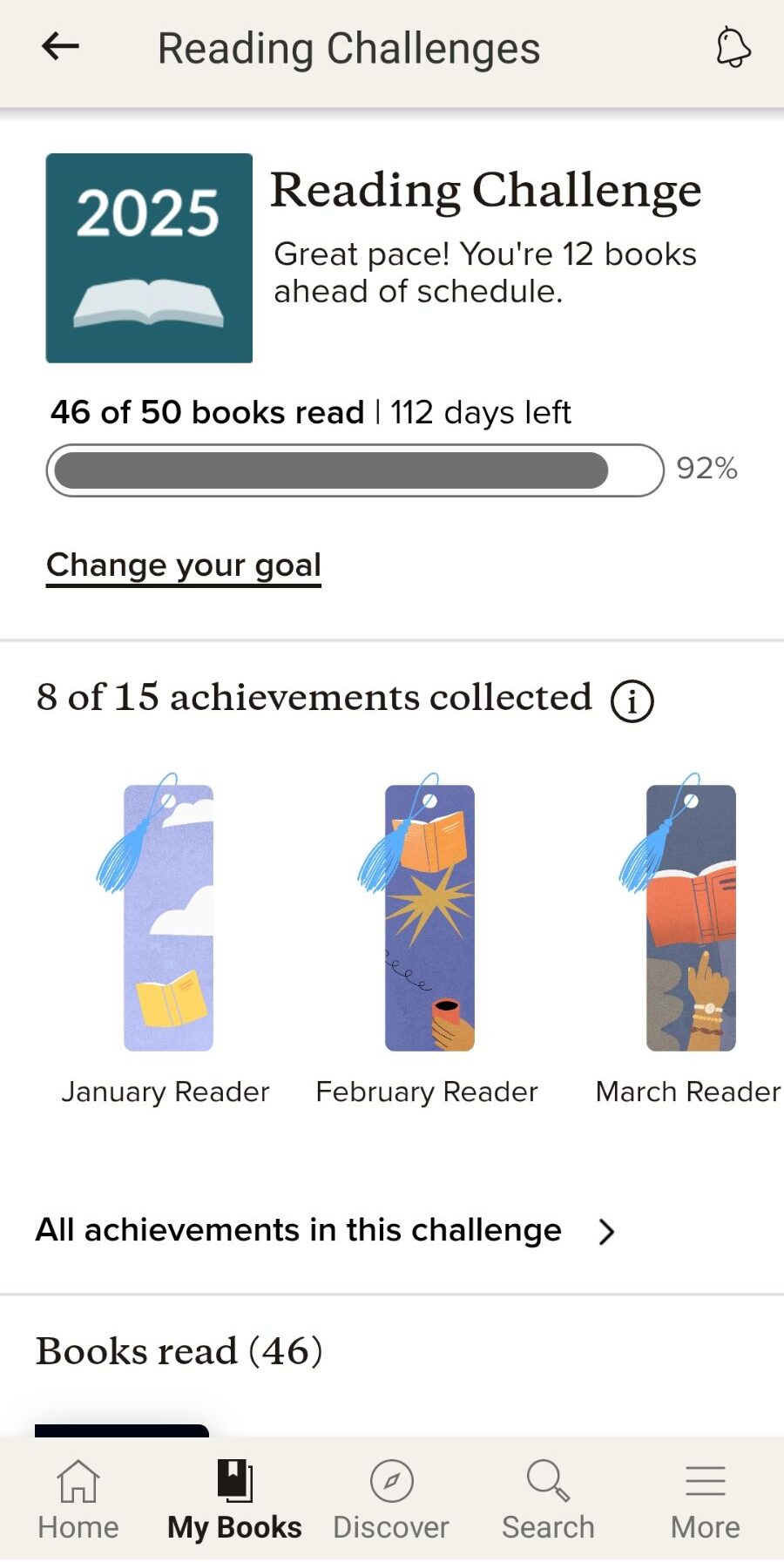
Goodreads began in 2006, and the platform is owned by Amazon. There is a large community on Goodreads with over 150 million users. I began using Goodreads in 2016 as a way to track my reading.I t is easy to search for books and read reviews for them. I do like setting a yearly reading goal on Goodreads. As you finish reading books during the year, the reading goal will show you how many books you have read so far, the percentage of the goal completed, and how many books you are ahead of or behind on.
At the end of the year, Goodreads does have a “My Year in Books”. The wrap-up shows you the total number of books and pages you read, the shortest and longest book, the average page length, the most shelved and least shelved book you read, the average star rating, the highest-rated book on Goodreads, along with your first review and last review of the year. I do find the year-end statistics lacking because there are no stats on genres or authors you read, or a breakdown of how many books you rated with each star rating.
Regarding the star rating, Goodreads used to only have the option to rate in full 1-5 stars. Goodreads has now added the option to rate in half and quarter stars. When I share book reviews on my blog, I rate them from 0-10. Therefore, it is great to be able to rate in half stars because there is a difference between a book that is 3.5 stars (7/10 rating on my blog) and 4.5 stars (9/10 rating).
I do like that both the Goodreads website and the app have the same features. You can search for books, add them to your lists, write reviews, and see progress in your reading challenge on both the website and app. However, I have read complaints about how outdated the website is, but the outdated look does not bother me. What bothers me is how much information is on the home page of the Goodreads website.
As soon as you open the home page, you are shown the book(s) you are currently reading, the progress of your reading challenge, the books you want to read, recent updates from friends, news and interviews from Goodreads, and recommendations, and it is a lot to process. Whereas other platforms like The StoryGraph are less in-your-face with information. I do find the Goodreads app less cluttered because the home page only shows recent updates from friends, and then you can click on the tabs to see your books and search for books.
| Pros | Cons |
| Large community | Owned by Amazon |
| Easy to find books in the catalog | Limited end-of-year statistics |
| Website and app have the same features | Website is cluttered |
The StoryGraph
The StoryGraph began in 2019 by Nadia Odunayo as an alternative to Goodreads. There are around 5 million users, which is small in comparison to Goodreads. I first used The StoryGraph a couple of years ago. However, I ended up deleting my account because I found it hard to keep up with adding books I read to both Goodreads and The StoryGraph. I did join again to be able to fully share my thoughts on The StoryGraph in this post.
A big benefit of The StoryGraph is that there are a ton of stats available for the books you read during the year. There are stats on the total number of books and pages you read, the mood and pacing of the books, a fiction and nonfiction breakdown, the genres you read, your most-read authors, the languages of the books, and a breakdown of your star rating with your average rating.
At the end of the year, The StoryGraph does have a “Reading Wrap-Up”. The wrap-up includes the total books and pages you read, the first and last book read, a mood map, the books and pages you read per month, the genres you read most, the longest and shortest book, the average length of the books, your most read authors, your average star rating, 5-star reads, a breakdown of the star ratings, and the months with the highest average and lowest average star rating.

The wrap-up also includes the month with the most read pages, the most shelved and least shelved books you read, how many new authors you read, how many books were part of a series, if you had any rereads, and if you had any DNFs. The year-end wrap-up is much more comprehensive than Goodreads, which shows why The StoryGraph is great if you are interested in knowing the stats for the books you read.
Furthermore, you can set a reading goal, a pages goal, and an hours listened to goal for the year on The StoryGraph. You can also create your own challenges, such as if you want to read books on your TBR or books from a specific genre. The options for making your own challenges are unlimited, which is great, as Goodreads only focuses on the total number of books you read in a year.
That said, there have been several times when I have searched for a book on The StoryGraph, but it is missing from the catalog. In comparison, I have been able to find the book on Goodreads with no issue. If a book you read is not that well-known, it might be missing from the catalog. However, you can manually add books to the database, but it is just another step you have to go through to add a book to your lists.
As far as rating books, you can rate books in quarter and half stars. As I mentioned above, I rate books from 0-10 on my blog. Therefore, I can easily convert the rating to half stars. Furthermore, The StoryGraph website is not cluttered like Goodreads. On The StoryGraph home page, you only see your to-read books, recommendations, and any books you are currently reading. Also, The StoryGraph website and app do have the same features, and the app is also not cluttered and shows the same home page of current reads, to-read books, and recommendations.
The last aspect I want to mention is that The StoryGraph does have a Plus plan for $4.99 a month. With the subscription, you can create custom charts, have extra stats filters, compare stats, and, overall, support a non-Amazon alternative to Goodreads. Without the Plus plan, you do have access to all the other stats I mentioned above, and the subscription just adds these extra features.
| Pros | Cons |
| In-depth reading stats | Small community |
| Can rate books in quarter and half stars | Unable to find some books in the database |
| Black and woman-owned | Need a monthly subscription to access all features |
Fable
Fable began in 2021, and the platform is now owned by Everand. The number of users on Fable is comparable to The StoryGraph, with around 5 million users. Also, Fable is the platform I joined most recently. One of the main features of Fable is joining a book club to connect with others who have similar interests. However, I have not looked into joining any of the book clubs. Therefore, the focus of this section will be on using Fable to track your reading.
In Fable, you can set a reading goal for the year, like on Goodreads and The StoryGraph. However, unlike Goodreads, Fable will show you how many books you read each month. Fable will also give you a breakdown of genres read, your average rating with a star rating breakdown, and your most-read authors for the books you read during the year. The stats are not as in-depth as The StoryGraph, but I do like the stats on Fable more than Goodreads. Also, Fable does have a reading streak where you can log your reading every day if you do have a goal to read each day.

At the end of the year, Fable does have a “Reading Wrap” similar to Spotify Wrapped. My reading wrap included a hot take for a book I rated low compared to others on Fable, a hyped book I read, the specific genres I am in the top 0.1% and top 5% of readers for, and then a summary of the total number of books read, the best daily reading streak, and the average rating of the books.
I like that on Fable you can rate books in quarter and half stars, but there is one downside to the platform. The Fable website is limited compared to the app. On the website, you can view and edit your profile, see books on your lists, and look for a club to join. Fable has now allowed you to add books to your want to read, currently reading, finished, or did not finish lists when searching for them on the website. You can also rate them and write reviews. However, you cannot see updates from users you follow on the website. There is also a constant banner when you are browsing books to download the app to access the missing features.
Another downside is that Fable has a Plus subscription that is bundled with Everand for $11.99 a month. With the subscription, you can set weekly and monthly goals, have more ways to track your reading, and have access to more charts to see how your reading has evolved over time. However, there is no way to use Fable Plus without subscribing to Everand.
| Pros | Cons |
| Good amount of reading stats | Small community |
| Can rate books in quarter and half stars | Website lacks features in the app |
| Can easily find a book club to join | Need a monthly subscription to access all features |
Which Book Tracking App is Better?
My answer to this question is going to be a bit complicated because I do think it depends on the type of reader you are. If you only want to keep track of the total number of books you read in a year, then Goodreads is great. You can easily find books and mark them as read throughout the year. Goodreads also has a large community and an extensive catalog of books. However, I do find the website cluttered.
If you are the type of reader who wants to know all the stats behind the books you read during the year, then The StoryGraph is perfect. You will have stats on the genres and authors you read, along with the mood and pacing of the books, and so much more. Also, if you want to create your own reading challenges outside of the total number of books you read in a year, then you can do so with The StoryGraph. That said, the community is smaller on The StoryGraph. Furthermore, there have been times when I had to manually add the books I read to the database to ensure no books were missing from my yearly total.
I do find Fable a good balance with the stats on the genres and authors you read, and with tracking the total number of books read in a year. You can also see how many books you read each month. With that said, Fable also has a smaller community. Additionally, the website lacks some of the features in the app.
For me personally, I will continue using Goodreads because I do like the ease of functionality of marking books I read throughout the year, and I like that both the website and app have the same features. I will also continue to use Fable because I do like the stats provided, and I hope that one day the Fable website will have all the features of the app.
Thanks for your sharing
You’re welcome!
A good comparison post of these book tracking apps. I like the sound of StoryGraph, I like that it gives you all the stats about the type of books you read during the year x
Lucy | http://www.lucymary.co.uk
StoryGraph is great especially if you are interested in all the stats for the books you read!
I only use goodreads and that is for posting book reviews for netgalley and when I want to look at reviews for books I am considering purchasing. I hadn’t heard of the other 2. I like the sound of Fables book club options. A great detailed post, thanks.
Thanks! I use Goodreads for writing reviews too and also seeing if a book I am interested in reading has good reviews. I have not explored joining a book club on Fable, but a friend I know is in one, and she highly recommends it!