Updated on September 16th, 2026
Collaborative Post | As we age or face mobility challenges, everyday tasks can become more difficult, particularly within our own homes. Creating a comfortable, safe, and accessible environment is essential for maintaining independence and ensuring that daily routines remain manageable. Whether you are planning modifications for yourself or a loved one or simply preparing for the future, there are various ways to make your home more accessible. This blog post will explore practical and affordable solutions, focusing particularly on installing a walk-in bath in the UK.
Bathroom Modifications
The bathroom is one of the most critical areas to consider when making accessibility adjustments. With slippery floors, hard-to-reach faucets, and high-sided bathtubs, it can quickly become a hazardous space. There are several options for creating a safer and more accessible bathroom.
One of the most impactful modifications is the installation of a walk-in bath. These baths are designed with a low-entry threshold, allowing users to step in without having to lift their legs over a high edge. This reduces the risk of falls, making it a perfect option for individuals with limited mobility. Walk-in baths often come equipped with seating and temperature controls, enhancing both comfort and safety. There are a range of options for a walk-in bath UK, tailored to the needs of older adults and those with mobility issues.
In addition to a walk-in bath, installing grab rails around the bath, shower, and toilet can provide extra support, reducing the likelihood of slips or falls. Another essential update is replacing bathroom tiles with non-slip flooring, which is a simple but effective way to enhance safety. Lastly, adding an adjustable showerhead can make bathing more convenient, especially for individuals who may need to sit while showering.
Kitchen Adaptations
For those who enjoy cooking or spend significant time in the kitchen, adapting this space to suit mobility needs is crucial. Kitchens can be transformed with a few thoughtful changes to ensure both safety and functionality.
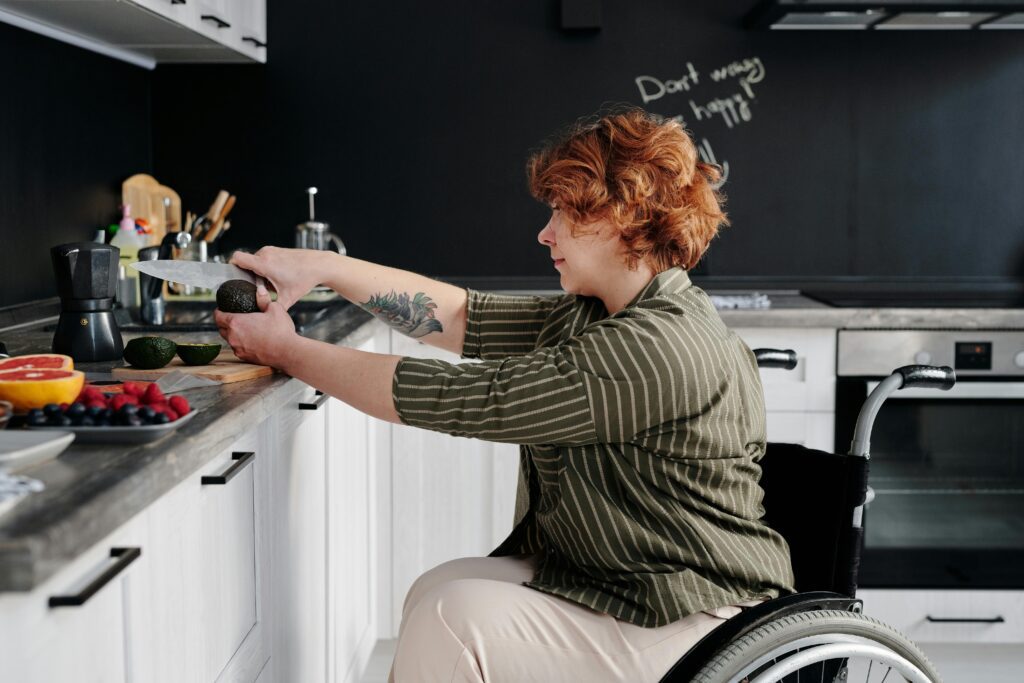
Lowering countertops can be helpful for individuals who use wheelchairs or have difficulty reaching high surfaces. This modification allows for easier food preparation and overall kitchen access. For more flexibility, adjustable-height countertops offer a practical solution for households where members have different mobility needs.
Installing pull-out shelving is another effective way to make the kitchen more accessible. By replacing traditional fixed shelving, it becomes easier to access items stored deep inside cabinets, reducing the need for bending or stretching. Additionally, replacing traditional round faucet knobs with lever-handled faucets makes it simpler to control water flow, especially for those with arthritis or limited hand strength.
Accessible Entryways and Hallways
Creating accessible entryways and hallways is essential for ensuring smooth mobility throughout the home. Entry steps, narrow hallways, and staircases can all present challenges for individuals with limited mobility, but these obstacles can be overcome with a few strategic changes.
Installing a ramp at the front or back of your home is a great way to eliminate the difficulty of navigating steps. For individuals using wheelchairs or walkers, a ramp can provide safe, effortless access. It is important to ensure the ramp has a gentle gradient, making it easier to use without causing strain.
If you or a loved one uses a wheelchair, widening doorways can significantly improve accessibility throughout the home. A standard doorway may be too narrow, but increasing it to at least 32 inches can provide more room for easy movement.
For homes with multiple levels, installing a stairlift is another smart investment. Stairlifts are motorised seats that carry individuals up and down stairs, ensuring that all floors remain accessible without the physical strain of climbing.
Smart Home Technology
Smart home technology has revolutionised accessibility, making it easier for individuals with mobility issues to maintain their independence. The integration of smart devices can significantly enhance convenience and safety within the home.
Voice-controlled assistants such as Amazon Alexa or Google Assistant are great tools for controlling various elements of your home, from lights and thermostats to kitchen appliances. This feature is especially helpful for individuals who have limited mobility or dexterity, allowing them to operate devices without the need for physical interaction.
Smart lighting is another excellent option to consider. Motion-sensor lights or remote-controlled smart bulbs can be turned on and off without needing to reach for switches. This is especially useful at night or for individuals with limited hand movement.
Video doorbells and other integrated hidden audio video systems add another layer of convenience, allowing you to see who is at the door without needing to move. Many video doorbells also enable two-way communication, so you can speak to visitors or delivery personnel without having to rush to the door.

Living Room and Bedroom Modifications
In living spaces like the bedroom and living room, the focus should be on comfort and ease of use. Simple adjustments to furniture and layout can make these spaces much more accessible.
Power recliner chairs are a great option for those who have difficulty standing or sitting down. With easy-to-use controls, these chairs allow users to adjust their seating position or stand without straining themselves. Similarly, adjustable beds, which allow users to elevate their heads or legs, can offer better support and comfort for individuals with mobility issues.
Furniture spacing is also important when designing an accessible living space. Make sure there is enough room between pieces of furniture to allow easy movement, particularly if you or a loved one uses a wheelchair or walker. This can prevent unnecessary obstacles and ensure safe navigation throughout the home.
Creating an accessible home is about anticipating future needs and making thoughtful modifications that enhance safety and comfort. Whether you are adding a walk-in bath or installing ramps and grab rails, these changes can have a significant positive impact on the quality of life for individuals with mobility challenges.
By making your home more accessible, you not only improve safety and comfort but also empower yourself or your loved ones to live independently for longer.
Hi Karalee,
Thanks for this. I have physical disabilities (Cerebral Palsy affecting my whole body,and a disability called Hydrocephalus). I have my disabilities because I was born at 29 weeks. Hydrocephalus is where there’s too much cerebrospinal fluid (a fluid which protects the brain and spinal cord). My body can’t regulate it on it’s own so I have a tube and valve inside my brain called a shunt, which drains it off. Here’s more information:https://www.shinecharity.org.uk/hydrocephalus/hydrocephalus
Thank you for sharing about your disabilities, and I will have to read more with the link you shared.