Collaborative Post | According to the report by the National Highway Traffic Safety Administration (NHTSA), there were 39,345 cases of people dying in road accidents in the United States in 2024. Some of these deaths resulted from head-on collisions.
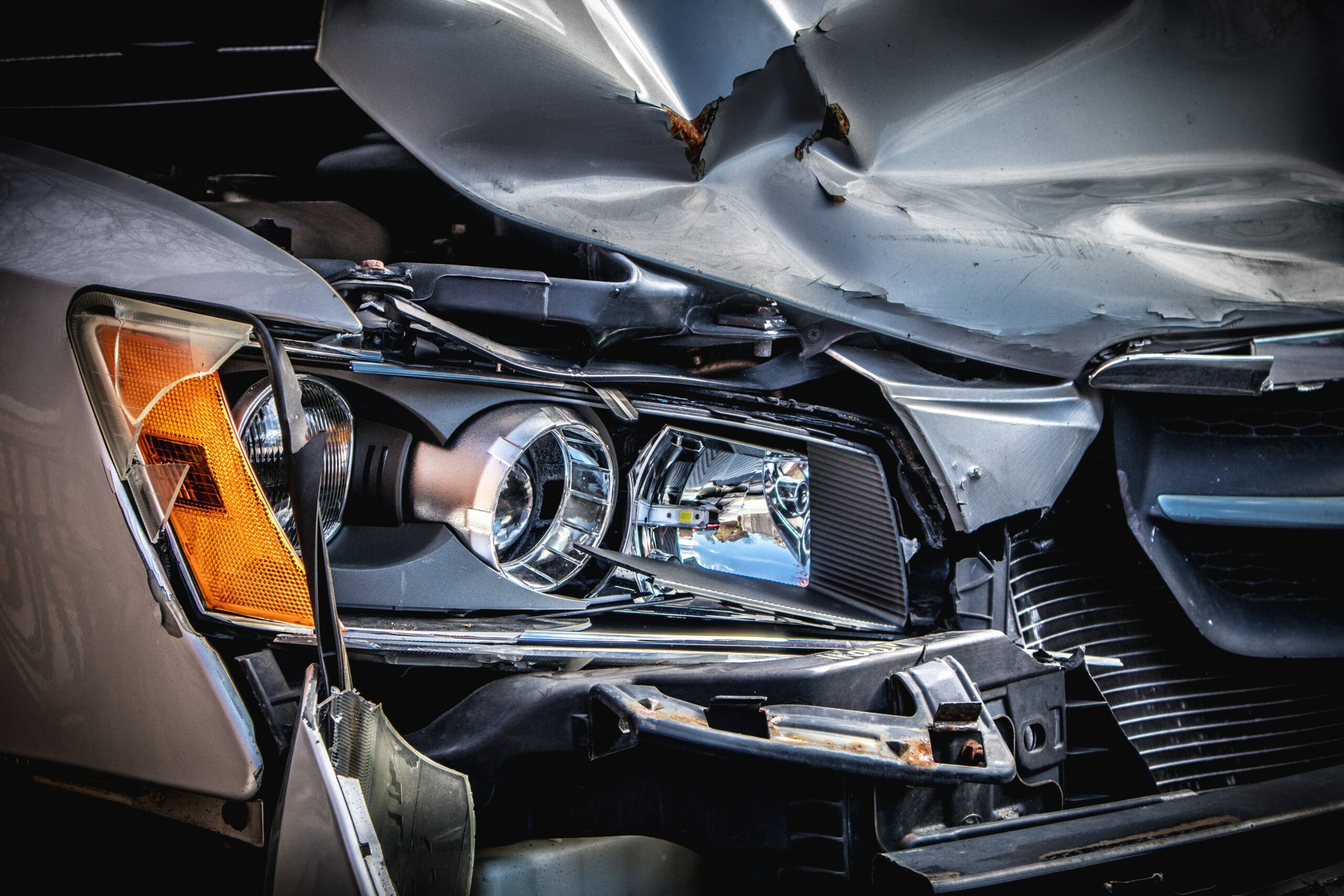
Are head-on collisions the most dangerous type of crash? Frontal vehicle impacts occur more frequently with greater fatality rates in rural than in urban areas. The rate of crash deaths per 100 million miles traveled is 1.56 in rural areas compared to 1.01 in urban environments.
In cases where two cars moving in opposite directions collide, the impact force can be devastating. Even lower speeds of such incidents may lead to severe injuries or even death. Other consequences of head-on collisions include brain injuries, spinal injuries, and even broken bones.
Let us find out the injuries that head-on crashes commonly cause, how fault is determined, and the legal options available to injured victims and their families.
How Head-On Collisions Compare to Other Crash Types
Rear-end collisions represent the majority of reported crashes in the U.S. According to police data released by the NHTSA, about 29% of such incidents are recorded. Angle collisions, or T-bone crashes, are also pretty common. These types of crashes account for roughly 22% of all crashes. The percentage of head-on collisions is much smaller than the aforementioned crashes.
What truly makes head-on collisions unique is that even with their lower frequency, they are much more dangerous than other types of crashes. Head-on collisions result in much greater levels of fatality than rear-end and angle collisions.
Most people wonder if claim compensation is applicable to these types of crashes. According to Santa Ana car accident lawyer Ken Sigelman, J.D., M.D, recovering damages requires you to identify the driver who caused your accident and prove they are directly responsible for your claimed losses.
The Physics Behind Why These Crashes Kill
The severity of damage in any vehicle collision depends on the kinetic energy involved, which is proportional to the square of the velocity. This means that increasing the velocity twofold will increase the energy fourfold.
Designs of vehicles have become better. Crumple zones, airbags, seat belt pretensioners, and enhanced frame strength have led to a reduction in fatalities in head-on collisions that would have resulted in fatalities in previous models of vehicles.
The NHTSA procedure for a frontal crash test entails crashing a car traveling at 35 miles per hour into a barrier. This process is expected to simulate head-on crashes between two cars. However, this testing method has several limitations when it comes to stimulating head-on collisions.
Occupant position matters since the way bodies sit changes how forces are transmitted. In a frontal impact, the driver is right in the deformation zone’s path. Airbag deployment, steering column intrusion, and dashboard compression all contribute to how severe injuries can be for the driver.
Primary Causes of Head-On Collisions
Head-on motor vehicle collisions are often caused by a number of interacting factors that can each be isolated for a more comprehensive study. These factors can be summarized into the following:
- Driving under the influence: Driving while using drugs or drinking alcohol is highly unsafe, since both chemicals can harm a person’s lane-keeping abilities, response time, alertness, and cognitive abilities.
- Drowsy driving: The AAA Foundation for Traffic Safety Research indicates that in 2017-2021, 17.6 percent of traffic fatalities involved a drowsy driver. Drowsy drivers can doze off while driving, which leads to the car’s brakes and steering not being controlled.
- Distracted driving: When focus switches to the phone, the in-car touch feature, or when the driver lets go of the steering wheel, the vehicle can start veering to one side before the driver is able to rectify such a deviation.
- Driving the wrong way: Statistics say that there are about 300-400 deaths each year resulting from head-on collision accidents in the U.S. involving the offender driving the wrong direction. Confusion over the road structure, including unrecognizable ramps or signs, is a leading reason for these frontal impact collisions.
- Two-lane roads: Head-on collisions on an unmarked highway usually occur when others miscalculate a car’s frontal speed or wrongly judge the space and speed of the car in front.
- Incidents of medical urgency: Situations like heart attacks, seizures, and fainting can arise at any time.
Injuries Commonly Seen in Head-On Crash Survivors
The injuries listed below are among the most commonly seen in survivors of frontal collisions:
- TBI (Traumatic Brain Injury): In the event of airbag deployment, the head will experience rapid deceleration, and the brain moves within the cranium. This sudden movement can result in various conditions, such as diffuse axonal injury, brain contusions, and hematomas.
- Spinal injuries: Compression fractures and cervical spine injuries can arise when the neck absorbs loads from both the initial collision and the airbag deployment phase.
- Chest and rib injuries: Direct contact of various chest components with the steering wheel and the seatbelt combined to produce chest injuries. High-speed frame-to-frame car accidents can result in various complications, such as pneumothorax, cardiac contusion, and rib fractures.
- Lower extremity injuries: An injury can happen to the lower leg, knee, and feet when forces experienced within the footwell and on the dashboard make contact with them. In frontal crash settings, these rates are typically higher than in other configurations.
- Internal organ injury: liver, spleen, and bowel damage may occur partly as a result of seatbelt restraint forces and direct impact.
These findings are frequently mentioned during crash trauma assessments.
Frequently Asked Questions
Who is typically liable in a head-on collision?
When frontal collisions happen, responsibility lies with the side that moved negligently in the opposite direction of the road.
The driver causes an accident when they are impaired, drowsy, or distracted. The employer may have a duty of care if the employee caused the accident.
Under dram shop rules, a bar or restaurant that serves an impaired person can be held liable. Even a vehicle maker could have some liability if a mechanical defect really led to a loss of control of the vehicle.
What compensation is available after a head-on collision?
The personal injury claim following the head-on collision would allow one to recover both present and future medical expenses. Loss of income and reduced capacity to earn income are other types of recoverable damages. It can also be possible to receive compensation for pain and suffering, along with any disability or disfigurement.
What if the at-fault driver was uninsured?
Uninsured motorist (UM) coverage on the injured party’s own policy can compensate if the at-fault driver has no insurance or insufficient coverage. The state insurance laws differ on whether UM coverage has to be there and what minimum limits apply.
How does evidence get preserved in head-on collision cases?
When dealing with head-on collisions, having early evidence is important. Modern automobiles have so-called “black boxes” known as an Event Data Recorder (EDR). These devices record the speed, braking, and steering information of a car prior to the crash. Dashcam video, roadside surveillance camera footage, and cell phone video clips are all likely to provide some insights into the accident itself. Police usually document any physical evidence left on the road, such as tire tracks, but this type of evidence tends to degrade.
Severity, Causation, and What Follows
Head-on collisions are dangerous as a result of the underlying physics. When cars collide head-on, the speeds of both cars combine and contribute to the impact force exerted on the victims.
A good percentage of head-on car crashes are a result of some form of driver misconduct, like drunk driving, driving while drowsy, distracted driving, or driving in the wrong lane. These types of misconduct suggest that many head-on crashes could have been avoided.
For survivors and those who lost friends and relatives in car crashes, knowing who is liable and assessing the severity of injuries helps determine the amount of the claim to be awarded.
The proper diagnosis of injuries, liability of all involved, and preservation of evidence are the first practical steps in making any legal move after such an accident.
When I got my driving course, we were encouraged to take the ditch in such circumstance; what makes it so deadly is how both véhicules still push forward (as that’s what cars do) even after the original collision.
I’ve never seen so many people going the wrong way in roads!! And people don’t seem to care either, especially in one ways or roundabouts 🤯 I don’t think the blame is to be put on the road signs and more on our cognitive functions…
That is good advice because going in the ditch would likely be less dangerous than the collision with the other car.
It is wild how many people do drive the wrong way especially when there are signs!